Mount Toubkal is North Africa’s highest peak at 4,167 meters, and it’s often marketed as the “easiest 4,000m summit in the world.” That’s mostly true, but it doesn’t mean beginners can walk up without preparation. Here’s an honest look at Mount Toubkal difficulty, broken down by what actually makes it hard and what doesn’t.
Is Mount Toubkal Hard for Beginners? The Short Answer
Yes, but not in the way most people expect. Toubkal requires no technical climbing — no ropes, no crampons in summer, no scrambling skills. What makes it hard is altitude, distance, and terrain underfoot, not rock climbing ability. A reasonably fit beginner who trains beforehand and paces correctly can reach the summit. Someone who shows up without any hiking background and expects a casual walk will struggle.
What Actually Makes Toubkal Difficult
1. Altitude
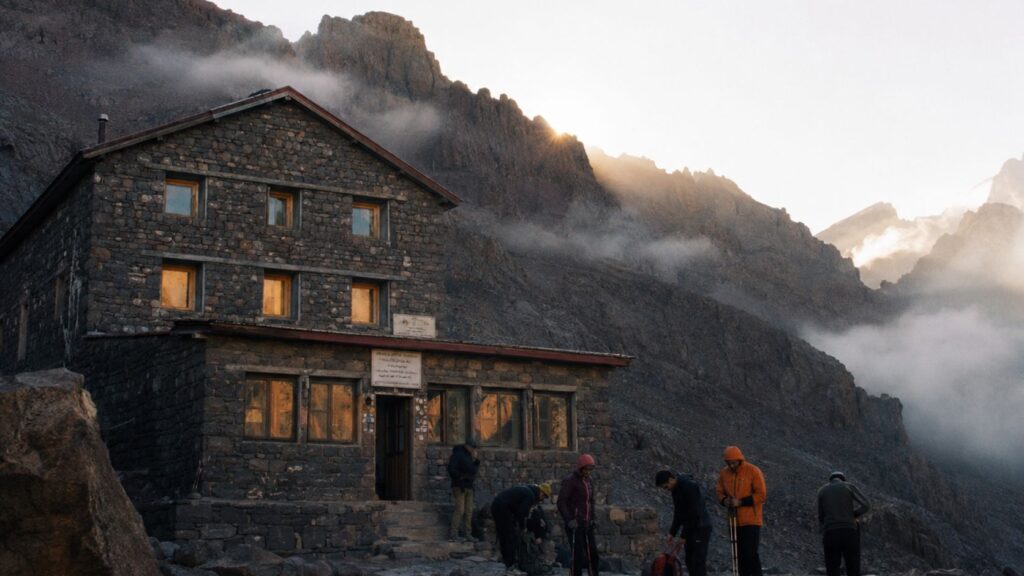
This is the single biggest factor in Mount Toubkal’s difficulty. At 4,167m, oxygen levels drop noticeably, and altitude sickness — headaches, nausea, fatigue, dizziness — can affect even fit trekkers who haven’t acclimatized. Most itineraries build in a night at the Toubkal Refuge (around 3,200m) specifically to reduce this risk before the final push.
2. Distance and elevation gain
The standard route from Imlil covers roughly 20+ km round trip with over 2,400m of cumulative ascent across two days. Summit day alone typically involves 5–7 hours of climbing before you even start the descent. It’s less about technical skill and more about stamina holding up over a long, sustained effort.
3. Terrain
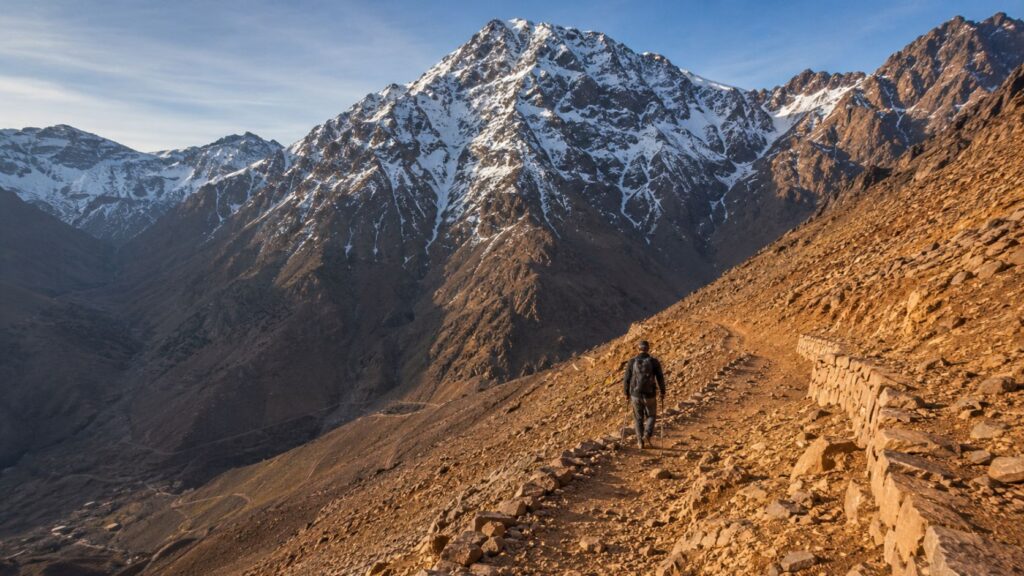
The path itself is non-technical, but it isn’t smooth. Expect loose scree, rocky switchbacks, and a steep final push to the summit ridge. In late season or early morning, sections can be icy. None of this requires special skills — but tired legs and unstable footing don’t mix well, which is where most minor injuries happen.
4. Weather swings
Conditions on Toubkal change fast. Clear, warm mornings at the refuge can turn into cold, windy summit pushes within a couple of hours. Winter (roughly November–April) adds snow and ice to the mix, and at that point crampons and an ice axe become necessary — this shifts Toubkal from “hard hike” to something closer to a proper mountaineering trip.
So, Can a Beginner Actually Do It?
Realistically, yes — with three conditions:
- Base fitness. You don’t need to be an athlete, but you should be comfortable hiking 6+ hours on consecutive days. If stairs or long walks already wear you out, Toubkal will be genuinely brutal rather than just challenging.
- A gradual pace. Most failed summit attempts come from people pushing too fast and hitting altitude symptoms hard. Slow and steady beats strong and fast on this mountain.
- A good guide. Toubkal National Park requires a licensed guide for the standard routes, which works in beginners’ favor — a guide sets pace, watches for altitude symptoms, and knows when to turn back.
Beginners who train for a few weeks beforehand (stair climbs, long walks with a loaded daypack, some cardio) consistently report the trek as tough but doable — not the miserable slog some horror stories suggest.
This is exactly the kind of trek where the right guide makes the difference between “hard but great” and “hard and miserable.” Our Mount Toubkal Trek from Marrakech is built around beginner-friendly pacing, licensed local guides, and proper acclimatization — so you’re set up to actually enjoy the climb rather than just survive it.
Toubkal Difficulty vs. Other Popular Treks
Toubkal sits above a standard lowland trek but well below anything requiring technical mountaineering: easier than Kilimanjaro (less prolonged altitude exposure), roughly comparable to a strenuous 2-day Alpine hut-to-hut hike, and far easier than any peak requiring roped travel or crevasse crossing. That’s why it’s often recommended as a “first 4,000m peak.”
Best Time to Climb for an Easier Experience
If difficulty is your main concern, timing matters. Late spring through early autumn (May–October) offers the most beginner-friendly conditions — no snow, stable weather, and no need for technical gear. Winter climbs are noticeably harder and should only be attempted with proper mountaineering experience or a specialized guide.
The Bottom Line
Mount Toubkal is hard in the way a demanding hike is hard — not in the way a technical climb is hard. Altitude and stamina are the real obstacles, not skill or experience. For a well-prepared beginner traveling with a licensed guide, it’s a genuinely achievable — if tiring — first major summit.
Ready to Take It On?
If you’re prepared to put in the training and want a trek that’s structured around getting beginners to the summit safely, check out our Mount Toubkal Trek from Marrakech — small groups, experienced local guides, and an itinerary paced for first-time high-altitude trekkers.