Can Beginners Climb Mount Toubkal?
Yes, but don’t confuse non-technical with easy.
The normal route involves long uphill walking, rocky and loose terrain, significant elevation gain and thin air above 3,000 metres. You don’t normally need ropes or advanced climbing experience in summer, but you do need reasonable fitness and the ability to walk for several hours.
If you regularly hike, walk long distances or train on hills and stairs, Toubkal can be a realistic goal.
Mount Toubkal Route for First-Timers
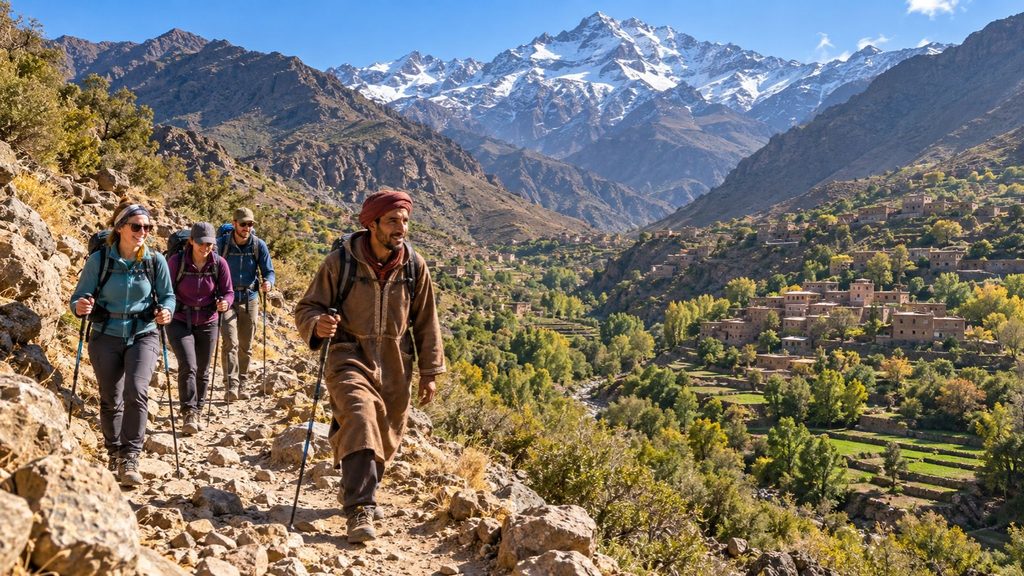
Most beginners start in Imlil, the main trekking village south of Marrakech.
Day 1: Imlil to Toubkal Refuge
The trek climbs through the High Atlas toward Sidi Chamharouch before continuing to the Toubkal Refuge at approximately 3,207 metres.
Expect roughly 4–6 hours of walking, depending on your pace and itinerary. The first day is mainly about gaining altitude gradually and saving energy for summit day.
Day 2: Refuge to Summit and Back
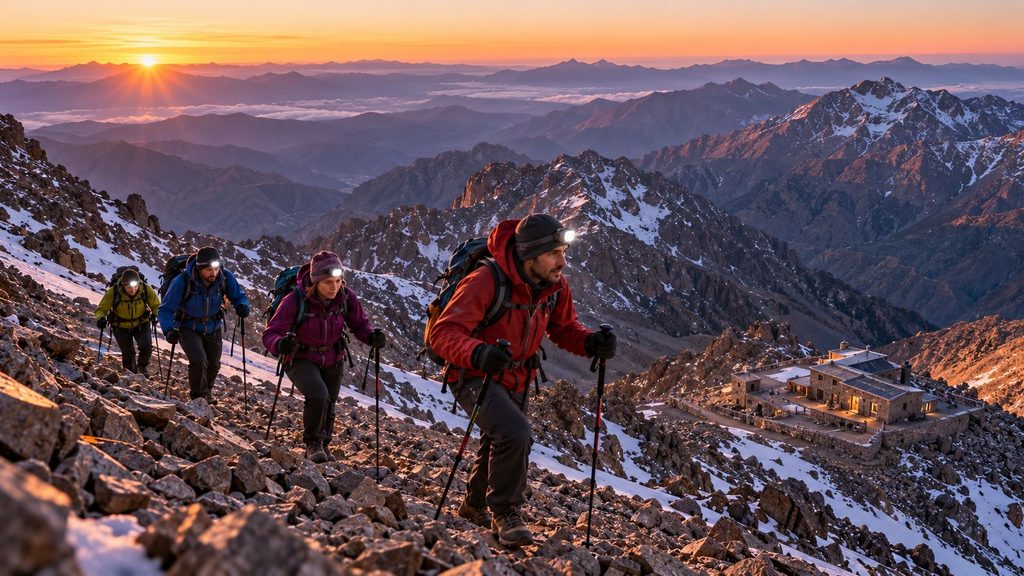
Most groups leave before sunrise. From the refuge, the route climbs steeply over rocky, loose terrain toward the summit at 4,167 metres.
After reaching the top, you descend to the refuge and then continue toward Imlil. A three-day itinerary can make this considerably more comfortable by splitting the descent.
For first-timers, a 3-day itinerary is worth considering if you want less pressure and more recovery time.
How Difficult Is Mount Toubkal?
The biggest challenges are:
- Altitude: 4,167m is high enough to cause altitude symptoms.
- Endurance: Summit day can involve several hours of continuous hiking.
- Terrain: Expect rocks, scree and steep sections.
- Descent: Tired legs can make the long downhill walk surprisingly demanding.
Don’t race uphill. A slow, consistent pace is usually more useful than trying to keep up with faster hikers.
If you develop severe headache, vomiting, confusion, difficulty walking or serious breathing problems, tell your guide and descend rather than attempting to push through.
Best Time to Climb Mount Toubkal
For beginners wanting the standard non-winter trek, late spring through autumn is generally the easiest period. Summer offers straightforward conditions on the normal route, although temperatures can be hot at lower elevations.
Winter is different. Snow and ice can turn Toubkal into a genuine mountaineering objective requiring appropriate equipment and experience. Beginners should not treat a winter ascent like a summer hike.
What to Pack for Toubkal
Your essential Mount Toubkal packing list should include:
- Broken-in hiking boots
- Warm fleece or insulating layer
- Waterproof jacket
- Comfortable hiking trousers
- Hat, gloves and sunglasses
- Sunscreen and lip balm
- Headlamp with spare batteries
- Reusable water bottles or hydration system
- Trekking poles
- High-energy snacks
- Small first-aid kit
- Sleeping bag suitable for cold mountain nights
Pack light, but don’t sacrifice warmth. Conditions at 3,200–4,167m can be dramatically colder than in Marrakech.
Do You Need a Guide for Toubkal?
Current local guidance indicates that trekkers on the Toubkal route are expected to use an accredited Moroccan mountain guide, with checks in the Imlil/Toubkal area. Because enforcement and local requirements can change, confirm the current arrangements when booking your trek.
A good guide also helps with pacing, navigation, weather decisions and altitude management.
Final Tips for First-Time Trekkers
The secret to Mount Toubkal for beginners is preparation rather than speed.
Train with long walks, add hills or stairs to your workouts, break in your boots and practise carrying your daypack. Arrive in Morocco rested, stay hydrated and give yourself enough time on the mountain.
Most importantly, respect the altitude. Reaching 4,167 metres is an achievement—but getting there safely matters more than reaching the summit on a fixed schedule.
Ready for Toubkal? Start with a realistic itinerary, prepare your legs, pack for changing mountain conditions and let the High Atlas be the adventure—not the surprise.