Most packing guides for a Sahara desert tour from Marrakech get one thing wrong: they prepare you for the daytime heat and forget about the night.
Desert temperatures can drop dramatically after sunset, especially from late autumn through early spring. That temperature change is one of the biggest reasons travelers arrive at camp under-prepared — either sweating during the day or shivering after dark.
This checklist fixes that. It breaks down what to pack season by season, what to wear for a camel ride, what you’ll actually need at camp, and which items are worth buying locally in Marrakech.
The Golden Rule: Pack One Small Bag
Before getting into the season-specific checklist, it’s worth understanding how luggage usually works on a desert tour.
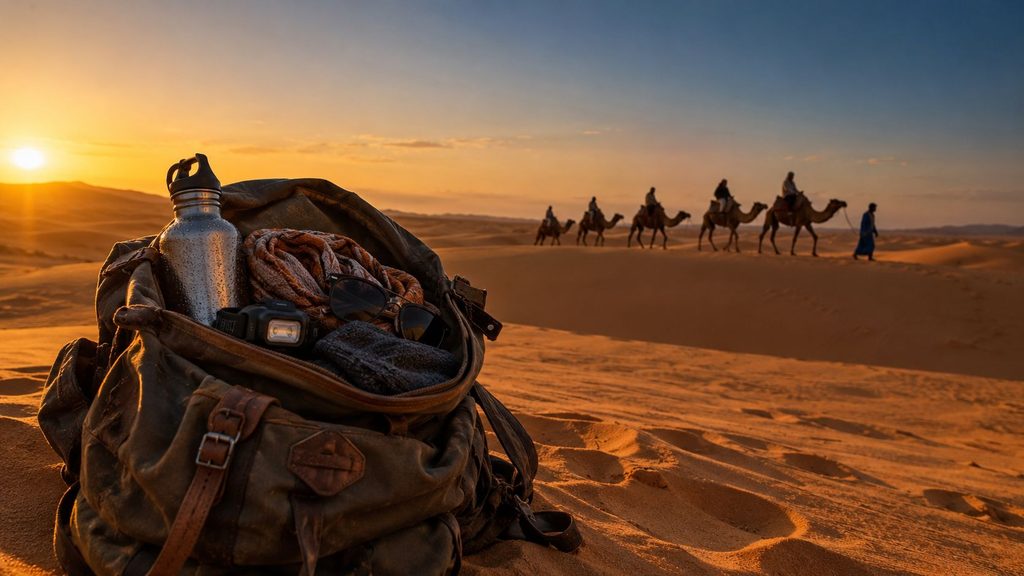
If you’re riding a camel into camp: on many itineraries, you’ll take only a small daypack or overnight bag into the dunes. Your larger luggage stays with the support vehicle and is available again when you return from the camel trek. Pack the essentials you’ll need overnight: water, a camera or phone, a warm layer, headtorch, toiletries, and medication.
If your itinerary drives you to camp by 4×4: you generally have more luggage space, making this the easier option for families or travelers who need to bring more gear.
If you’re returning to Marrakech after the desert trip, ask your riad, hotel, or tour operator whether they can store your main luggage while you’re away. Leaving a large suitcase behind makes the desert portion of the trip much easier.
Season-by-Season Packing Table
The table below gives a general idea of conditions around the Merzouga/Erg Chebbi dunes, one of the most popular destinations on a Marrakech-to-Sahara itinerary. Actual temperatures vary by month and weather conditions, so use these figures as a guide rather than a forecast.
| Season | Typical Conditions | What Changes |
| Spring (Mar–May) | Warm days, cool nights | Light layers work well; bring one warm layer for evenings and early mornings. |
| Summer (Jun–Aug) | Very hot days, warm nights | Prioritize breathable clothing, sun protection, and hydration. |
| Autumn (Sep–Nov) | Warm days, increasingly cool nights | Similar to spring, but bring an extra layer toward November. |
| Winter (Dec–Feb) | Mild days, cold nights | Warm layers become essential, particularly before dawn. |
Traveling in a shoulder month? Pack for the cooler end of the range. Desert temperatures can fall quickly after sunset, and early mornings can feel much colder than the afternoon.
Spring & Autumn (Mar–May, Sep–Nov)
These are generally among the easiest seasons to pack for.
- Lightweight fleece or packable down jacket for the evening
- Long-sleeve shirt or light thermal top
- Lightweight trousers
- Sun protection
- Scarf or turban for sun and wind protection
- Comfortable closed-toe shoes
Summer (Jun–Aug)
Summer is primarily about managing heat and sun exposure.
- Loose, breathable cotton or linen clothing
- Lightweight long-sleeve shirt for sun protection
- Loose trousers rather than tight jeans
- Extra water capacity
- High-SPF sunscreen
- Sunglasses with good UV protection
- Wide-brim hat or cap
- Scarf or turban for additional protection from sun and blowing sand
A warm jacket usually isn’t necessary for summer, although a light layer can still be useful after sunset or during air-conditioned transport.
Winter (Dec–Feb)
Winter is the season travelers most often underestimate.
- Thermal base layer for sleeping
- Insulated jacket — down or synthetic fill is better than a thin fleece alone
- Warm socks
- Beanie or other warm hat
- Gloves if you feel the cold easily
- Warm trousers or an additional layer for evenings
- Closed-toe shoes
The coldest part of the night is usually around the early-morning hours, so don’t pack only for the relatively mild daytime temperatures.
The Base Packing List (Every Season)
Regardless of when you travel, these are the essentials worth having:
- Sun protection: SPF 50+ sunscreen, a wide-brim hat or cap, and sunglasses
- A large scarf or turban (shesh): useful for sun, wind, blowing sand, and dust
- Loose, breathable clothing: long sleeves and full-length trousers are generally more comfortable than shorts and tight clothing
- Closed-toe shoes: comfortable trainers or walking shoes that you’ve already broken in
- Headtorch or small flashlight: useful for moving around camp after dark
- Power bank: ideally 10,000mAh or more, since charging facilities can be limited
- Reusable water bottle: particularly important during the hotter months
- Basic toiletries: including tissues, wet wipes, hand sanitizer, and lip balm
- Personal medication: bring everything you need for the duration of the trip
- Small daypack: useful for the camel ride and desert excursions
- Ziplock or waterproof pouch: useful for protecting your phone, camera, and other electronics from sand
What to Wear for the Camel Ride
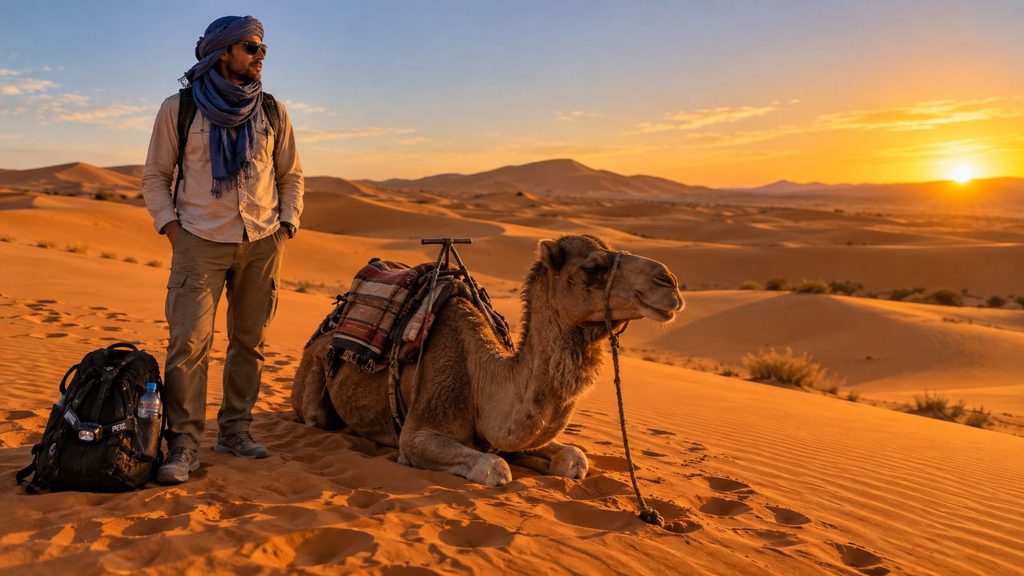
The camel ride deserves its own packing advice because the wrong clothing can quickly become uncomfortable.
For a typical 1–2 hour camel trek:
- Wear loose-fitting trousers, not shorts or tight jeans. They reduce rubbing and chafing while you’re riding.
- Choose a long-sleeve top, even in summer, for protection from the sun and wind.
- Bring or wear a scarf, which can cover your head, neck, and lower face when the wind picks up.
- Wear flat, comfortable closed-toe shoes that are easy to take on and off.
- Avoid brand-new shoes. Sand, walking, and a camel ride are not the ideal combination for breaking in footwear.
You don’t need specialist desert clothing. Comfortable, loose layers work perfectly well.
Camp Night Essentials: What’s Provided vs. What to Bring
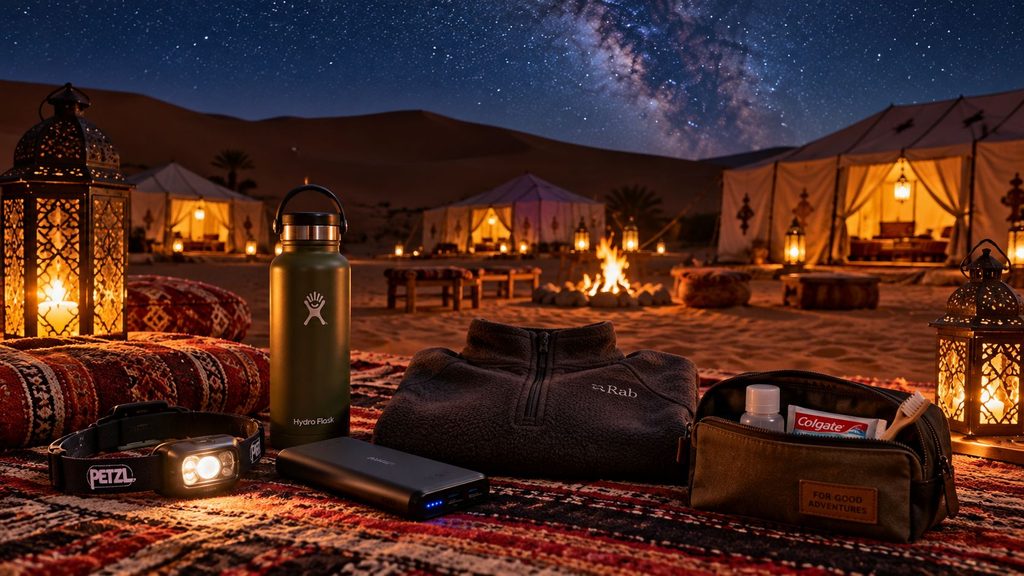
You generally don’t need to bring your own bedding for an organized desert camp stay. Standard and luxury camps typically provide beds, bedding, blankets, and pillows, although the exact setup varies by camp.
What the camp typically provides
- Bed and bedding
- Blankets and pillows
- Dinner and breakfast
- Basic lighting
- Bathroom facilities, depending on the camp category
Luxury camps may provide additional bedding and heating during colder periods, but this varies by property.
What you should still bring
- Warm base layer for sleeping from autumn through spring
- Headtorch or small flashlight
- Personal medication
- Toiletries
- Power bank
- Water bottle
- Earplugs if you’re a light sleeper
If you’re visiting in winter, check with your tour operator what heating and additional blankets are available at your specific camp.
What to Buy in Marrakech Instead
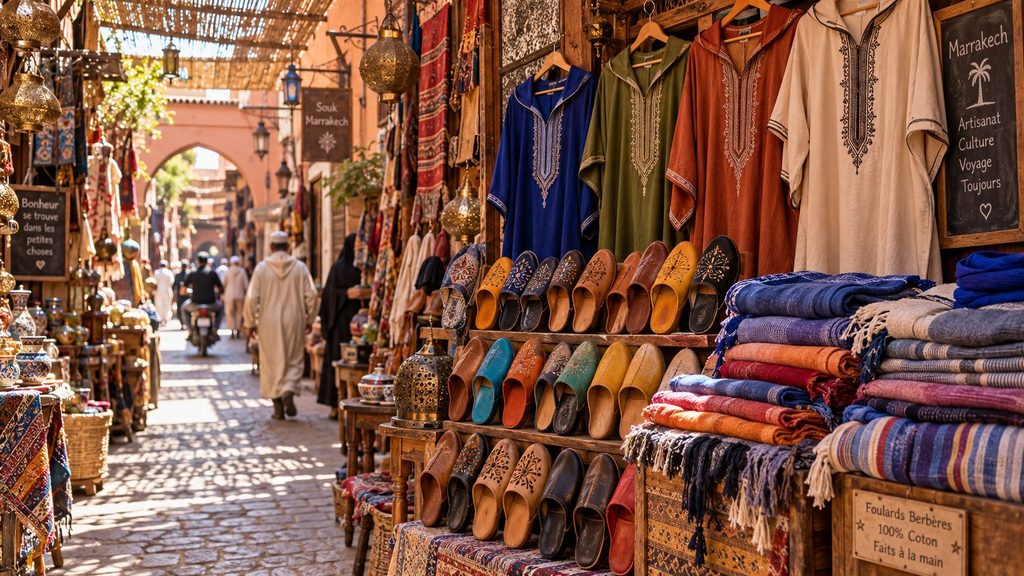
A few desert-friendly items are worth buying locally rather than packing them from home. They’re practical souvenirs, and buying them locally also supports Moroccan artisans and small businesses.
Jellaba (hooded robe)
A lightweight cotton jellaba can be useful around camp and as an extra layer in cooler weather. Prices vary considerably depending on the fabric, quality, and shop, so treat 150–400 MAD as a rough shopping range rather than a fixed price.
Babouche slippers
Traditional Moroccan babouche slippers are handy around camp when you want to take off your dusty walking shoes. Expect prices to vary by material and craftsmanship; roughly 40–200 MAD is a reasonable range to budget for basic to higher-quality pairs.
Shesh or mandil (scarf/turban)
This is one of the most useful things to buy locally. A large scarf can protect you from sun, wind, and blowing sand and takes almost no space in your luggage.
A basic scarf may cost around 50–100 MAD, although prices vary depending on size and material.
The Marrakech medina and souks are convenient places to look for these items before your tour. Haggling is common in many traditional souks, particularly for tourist-oriented goods.
What NOT to Bring
A hard-shell suitcase
If you’re taking a camel trek, a large hard-shell suitcase is cumbersome. Ask your operator what luggage arrangement they use and take only the bag you’ll actually need in the dunes.
A drone without the required authorization
Don’t assume you can simply arrive in Morocco and fly a drone over the Sahara. Drone importation and operation are subject to Moroccan regulations and can involve authorization requirements.
If you want to bring a drone, check the current Moroccan aviation and customs rules before your trip. For most travelers, leaving the drone at home is the simplest option.
Brand-new shoes
Break them in before your trip. Your feet will thank you after a day of walking, driving, and camel riding.
Excessive cash or valuables
There’s little reason to carry large amounts of cash or unnecessary valuables into the desert. Bring enough spending money for your itinerary and keep important valuables secure.
Flip-flops as your main footwear
They’re fine around some camps, but they’re not a practical primary shoe for walking on sand, gravel, or during excursions.
Does Tour Length Change What You Pack?
Not dramatically.
A 2-day Marrakech desert tour with one night in the desert can be done with a relatively small overnight bag. A 3- or 4-day itinerary may require an additional change of clothes and an extra layer, particularly if your route includes the Atlas Mountains, Dades Valley, or Todra Gorge.
Those areas can feel considerably cooler than the desert, especially during the colder months, so don’t pack exclusively for the dunes.
If you’re still deciding how long to travel, see our 2-day vs. 3-day Marrakech Sahara tour comparison for a breakdown of the different itineraries.
[Insert your internal link here]
Quick Packing Checklist
If you just want the essentials, start with this:
- ☐ SPF 50+ sunscreen
- ☐ Sunglasses
- ☐ Hat or cap
- ☐ Large scarf/turban
- ☐ Loose, breathable clothing
- ☐ Long trousers
- ☐ Long-sleeve shirt
- ☐ Comfortable closed-toe shoes
- ☐ Warm layer
- ☐ Thermal layers for winter
- ☐ Headtorch
- ☐ Power bank
- ☐ Reusable water bottle
- ☐ Basic toiletries
- ☐ Tissues/wet wipes
- ☐ Personal medication
- ☐ Small daypack
- ☐ Phone/camera protection from sand
FAQ
Yes, organized desert camps generally provide beds, bedding, blankets, and pillows. Luxury camps may provide additional bedding or heating, particularly during colder periods. Check with your specific operator if you’re traveling in winter.
Don’t fly a drone without first checking and obtaining any authorization required under current Moroccan regulations. Drone importation and operation rules can be strict, and equipment may be subject to customs restrictions.
Broken-in trainers or comfortable closed-toe walking shoes are the best all-round option. Avoid new shoes, rigid footwear, and relying on flip-flops as your main pair.
Winter nights in the Sahara can become genuinely cold, particularly before dawn. Conditions vary by location and weather, so pack a thermal base layer, warm socks, and a properly insulated jacket rather than relying on a lightweight fleece alone.
This depends on the tour operator and camp. On many camel-trek itineraries, you’ll take only a small daypack or overnight bag into the dunes while larger luggage remains with the support vehicle. Confirm the exact arrangement before departure.
Ready for Your Sahara Desert Tour from Marrakech?
Once you’ve got the right layers, comfortable shoes, sun protection, and a few desert essentials, there’s no need to overpack.
Bring less, layer smart, and leave the suitcase behind whenever you can.