Standing at 4,167 metres, Jebel Toubkal is the highest peak in North Africa, and it’s one of the very few 4,000m+ summits in the world you can reach without any technical climbing skills. That accessibility is exactly what creates the dilemma most travellers face when planning their trip: should you do the Toubkal trek in 2 days, or take the safer, more comfortable 3-day route?
Both itineraries get you to the same summit via the same South Cirque route from Imlil. The difference isn’t where you go — it’s how much time your body gets to adjust, rest, and enjoy the mountain along the way. Below, we break down exactly what each version looks like on the ground, so you can match the trek to your fitness level, schedule, and altitude tolerance.
Toubkal Trek 2 Days vs 3 Days: Quick Comparison
| Factor | 2-Day Trek | 3-Day Trek |
|---|---|---|
| Total hiking time | ~10-12 hours | ~14-16 hours |
| Overnight stops | 1 (Toubkal Refuge) | 2 (Refuge + Imlil or Azzaden Valley) |
| Acclimatization | Minimal | Better |
| Physical difficulty | High | Moderate-High |
| Summit day length | 6-8 hours round trip | 6-8 hours round trip |
| Best for | Fit, time-limited hikers | First-time trekkers, altitude-sensitive hikers |
| Typical cost | Lower (fewer guide/mule days) | Slightly higher |
| Risk of altitude sickness | Higher | Lower |
The 2-Day Toubkal Trek: Fast and Focused
The 2-day itinerary is built for hikers who are already in good shape and want to bag the summit on a tight schedule — a common choice for people combining Toubkal with a short Marrakech city break.
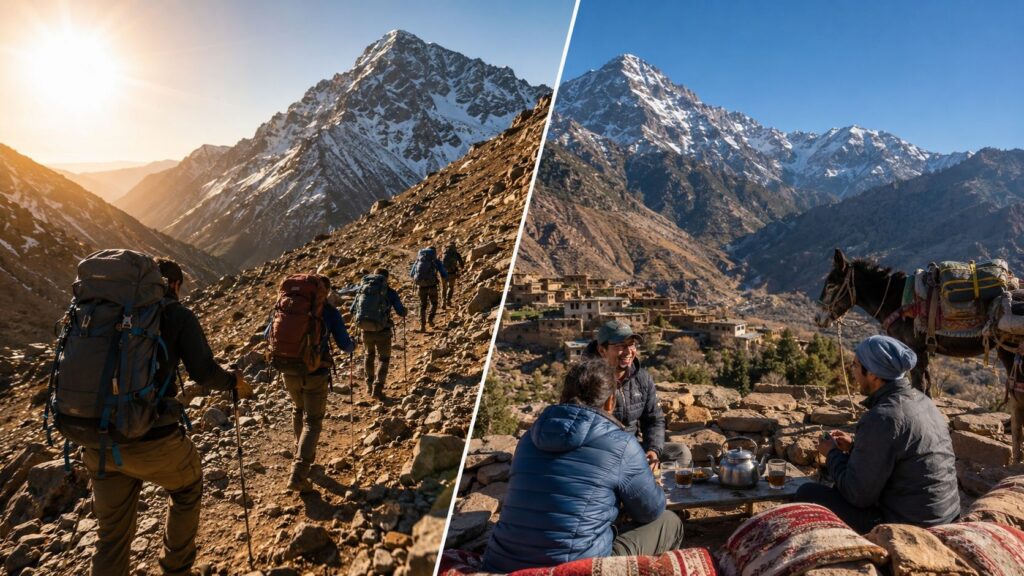
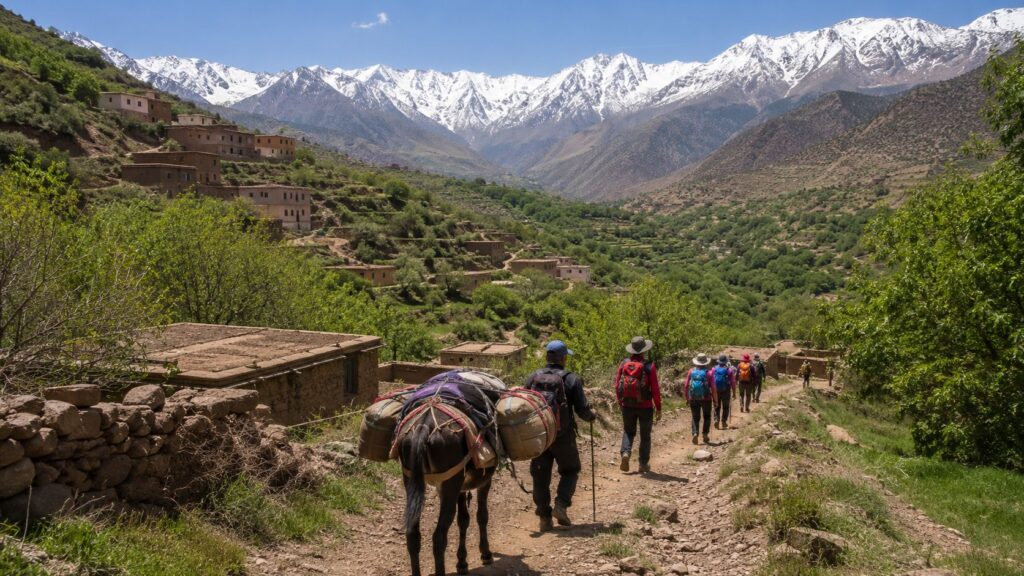
Day 1: Drive from Marrakech to Imlil (roughly 1.5 hours), then trek directly to the Toubkal Refuge at 3,207m. This is a 5-6 hour climb through the Mizane Valley and past the Sidi Chamharouch shrine, gaining over 1,600m in a single day.
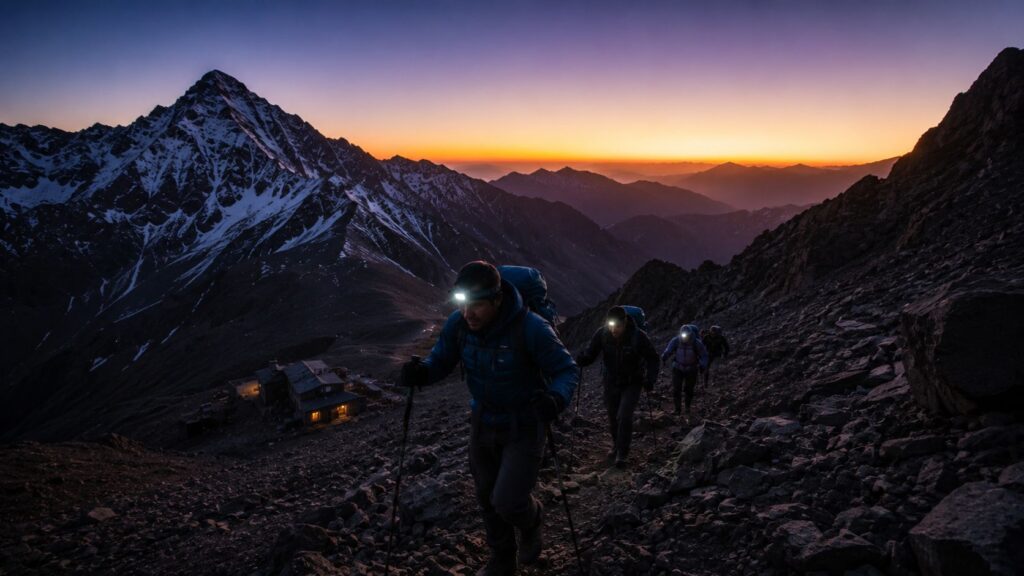
Day 2: Wake before dawn (often around 4-5am) to summit, taking 3-4 hours up the scree slopes to the top, then descend all the way back to Imlil — another 5-6 hours. It’s a long, demanding second day with over 2,000m of descent.
Who it suits: Trekkers with prior high-altitude experience, strong cardiovascular fitness, and limited vacation days. It is not the right choice if you’ve never slept above 3,000m before, since the rapid elevation gain leaves little buffer for altitude adjustment.
The 3-Day Toubkal Trek: The Safer, Steadier Route
The 3-day version spreads the same distance over an extra day, usually by adding a night in the Azzaden Valley or a rest stop in Imlil before or after the refuge night. This extra day exists almost entirely to help your body acclimatize.
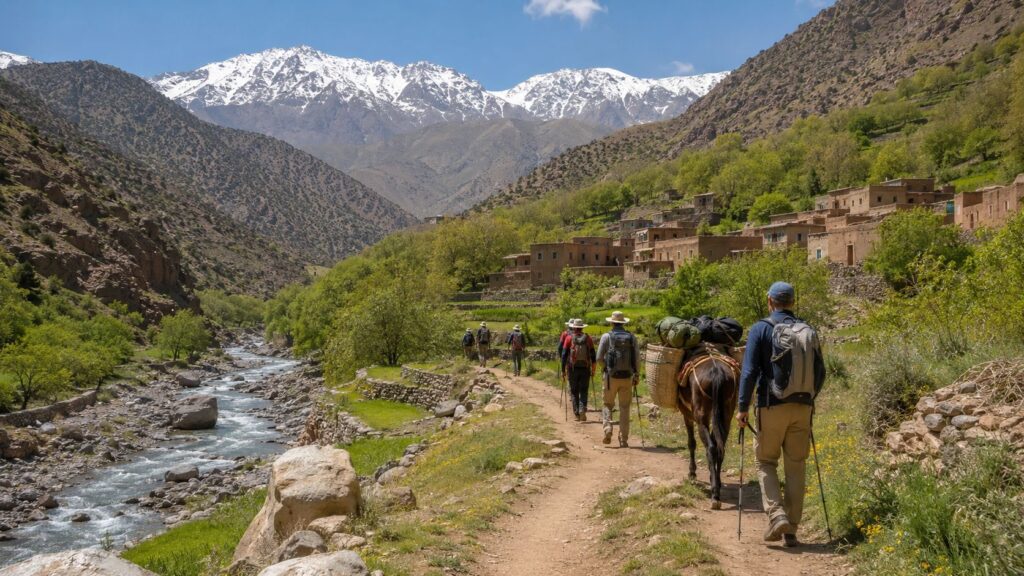
Day 1: A shorter, gentler walk from Imlil into the surrounding valleys (Azzaden or around the Kasbah du Toubkal in Imlil), staying at a lower elevation to ease into the altitude.
Day 2: Trek up to the Toubkal Refuge, following the same Mizane Valley route as the 2-day version, but starting from a body that’s already had a day to adjust.
Day 3: Early summit push and full descent back to Imlil, identical to Day 2 of the 2-day itinerary — except your legs and lungs have had two days of preparation instead of one.
Who it suits: First-time high-altitude trekkers, anyone over 45 or with average fitness, and travellers who’d rather enjoy the Berber villages and valley scenery than rush through them. This is the itinerary most guiding companies and mountain guides recommend as the default.
Key Factors to Weigh Before You Decide
Acclimatization and Altitude Sickness
This is the single biggest reason to choose 3 days over 2. Above 3,000m, the body needs time to adapt to lower oxygen levels. The 2-day trek asks you to gain roughly 1,600m in one day and then push to 4,167m the next morning — a profile that raises the risk of headaches, nausea, and fatigue on summit day. The 3-day trek’s gentler first day gives your body a meaningful head start.
Physical Fitness Required
Both itineraries cover similar total distance and elevation, so the fitness bar for reaching the summit doesn’t change. What changes is daily exertion. The 2-day trek compresses that same effort into two brutal days; the 3-day trek spreads the load, making it noticeably more forgiving on the legs, knees, and lungs.
Time and Budget
If you’re short on vacation days or budget, the 2-day trek is cheaper (fewer guide and mule-hire days) and faster to fit into a Marrakech itinerary. The 3-day trek costs a bit more and needs an extra day off, but that cost buys a real safety margin and a more relaxed experience of the Atlas Mountains scenery.
Scenery and Experience
Hikers who choose the 3-day route consistently report more time to actually take in the Berber villages, walnut groves, and valley views along the way, rather than treating the trek purely as a summit push. If the mountain culture and landscape matter as much to you as the peak itself, the extra day pays for itself.
Which Should You Choose?
If you’re an experienced high-altitude hiker with a tight schedule and no history of altitude issues, the 2-day Toubkal trek is a legitimate, well-trodden option. For most people — first-timers, moderately fit hikers, or anyone who wants a genuine safety buffer against altitude sickness — the 3-day Mount Toubkal trek is the smarter choice. It’s the itinerary that gives you the best odds of actually enjoying the summit rather than just surviving it.
Not sure which fits your fitness level and travel dates? Talk to a local Toubkal guide before you book — they can assess your hiking background and recommend the itinerary that matches it, plus handle permits, refuge bookings, and mule support for either route.
Ready to plan your Toubkal trek?
Still deciding between 2 and 3 days? Tell us your travel dates, hiking experience, and preferred itinerary. Our local team can help you choose the right Toubkal trek and plan the logistics.